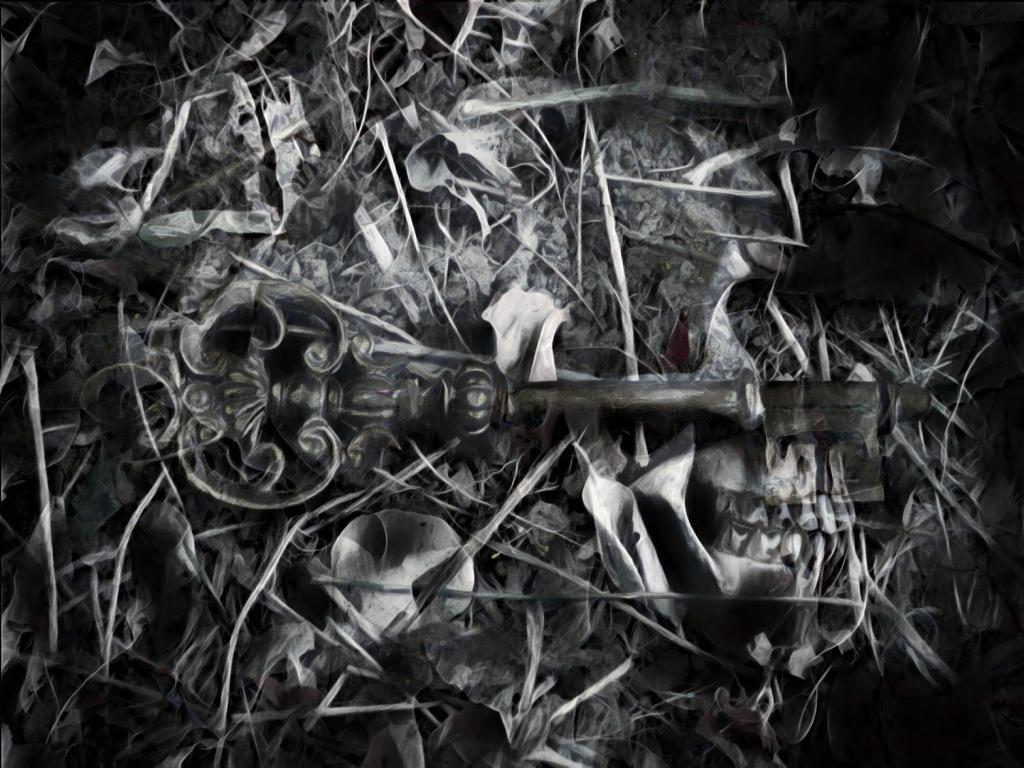
Happiness had never really existed. Situations and circumstances masqueraded as such, but genuine happiness had escaped me.
If I had one excuse why it had, I had a thousand, but none of that seemed to matter anymore. Excuses were no longer acceptable. The time had come to face the facts and remove the mask.
Happiness isn’t a destination, it’s a perception, and mine left me wanting. All the chemical cocktails in the world were not going to change my perception of reality. Numb them or obscure them perhaps, but change them? Not likely.
I’m too this, I’m not enough that—if only I’d stop, if only I’d start. If only I didn’t see everything. If only I could close my eyes, and it would all just go away.
Forget who you are and remember who you were, the voice in my head repeated over and over—a chant that became my obsession. Who was I? For that matter, who am I? And what difference would forgetting one to remember the other make?
I wasn’t sure, but perhaps it was time to fall into the abyss that had threatened to consume me since my adolescence. Maybe, just maybe, down in that dark hole I feared I’d never find my way out of, was the key I needed to find my way free. And maybe that key that would open a lock that would open a door that I’d walk through, and be able to breathe for once in my life—really breathe, deep and full breaths that would set my soul soaring.
Or maybe I’d fall into that dark abyss and never come back. I’d rot until there was nothing left of me but bones in which the true nature of my sadness would be found.
“She was sad to the bone,” the medical examiner would say. “Right to her very bones there was a melancholy so great we’ve not a name for it.”
My skeleton would be erected in a classroom, but not a biology class, in a psychology class.
“See here, we can see this woman was greatly and devastatingly sorrowful,” the professor would explain, pointing to various bones the color of tar from the black bile that permeated them.
“Melancholia,” he’d announce.
“Depression,” he’d state.
“A mood disorder,” he’d say in a disapproving tone, shaking his head.
“A broken brain, most certainly insane, with a compulsion to rhyme, tapping her foot and keeping time—a manic depressive, most certainly!”
The class would sit devoid of expression and emotion as they examined the skeleton of a woman whose bones were bad, whose bones were sad, who rotted away in an abyss she so willing let herself fall.
Read and recorded by Viktor Aurelius ~ Music by Kevin MacLeod.
From my book: A Dark Quill
 SB LACROIX
Share your thoughts